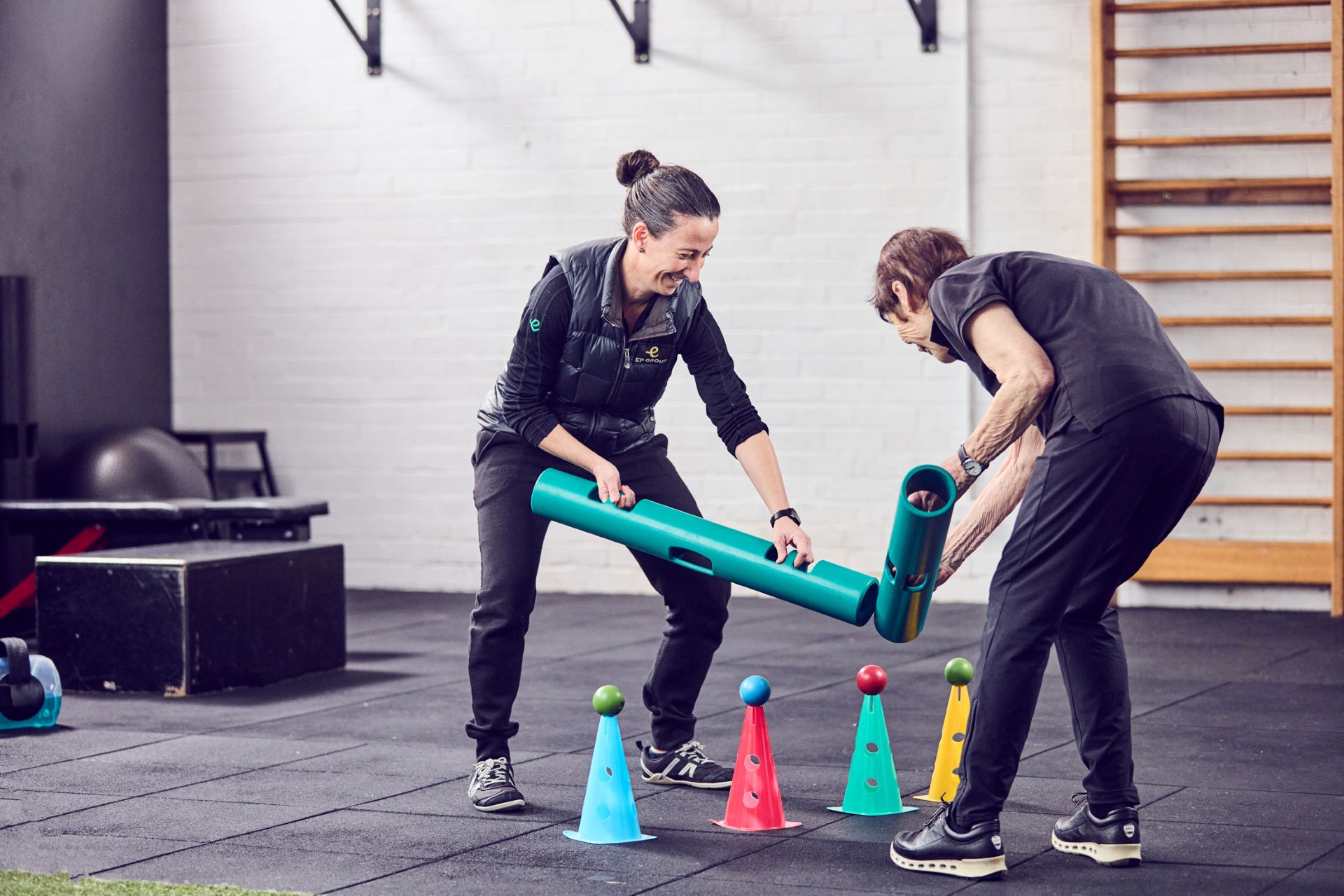



Falls are Preventable: You are not beyond saving!
Falls are one of the leading causes of injury, hospitalisation and death among older Australians. The risk climbs sharply after age 65, and adults aged 85 and over are especially vulnerable. Beyond the physical injury, a fall can take away something just as important: independence.
The good news? Falls risk isn’t simply a fact of ageing — it’s highly modifiable. And the right professional support can make all the difference.
Falls Risk Is Individual — Generic Advice Isn’t Enough
According to the 2025 Australian Commission on Safety and Quality in Healthcare Falls Guidelines (the gold standard for falls prevention), risk should be assessed individually rather than through generic checklists or a one-size-fits-all program. Common contributing factors include:
- A sedentary lifestyle or low physical capacity
- Certain medications, particularly those linked to sedation, dizziness or blood pressure changes
- Vision or hearing impairment
- Dizziness or fainting episodes
- Poor foot health or unsuitable footwear
- Cognitive impairment
- Fear of falling
- Limited social support
Of all these, a sedentary lifestyle stands out as the single biggest modifiable risk factor — and exercise has the strongest evidence base of any falls prevention strategy available.
The Role of Exercise in Falls Prevention
Older adults are generally encouraged to aim for at least three hours of mixed-modality exercise each week, combining balance training with cardiovascular activity, mobility work and strength training.
Struggling to stand up from a chair, hesitating on stairs, or walking more slowly than usual are all common warning signs linked to falls risk. Balance training specifically helps address these issues, but it works best as part of a broader program — not as a stand-alone fix.
Why an Exercise Physiologist Is the Right Practitioner for the Job
Not all exercise advice is created equal, and falls prevention exercise is a case where getting it wrong can do more harm than good. A generic balance program can actually increase risk for someone who’s already unsteady on their feet — particularly if they’re managing other conditions like osteoporosis, dementia, or a previous injury.
This is exactly the kind of complexity Accredited Exercise Physiologists (AEPs) are trained to navigate. As university-qualified allied health professionals specialising in clinical exercise prescription, AEPs are equipped to:
- Assess individual risk factors properly. Rather than applying a generic score or checklist, an AEP looks at a person’s strength, balance, gait, medical history and lifestyle to build a true picture of their risk.
- Prescribe exercise that challenges balance safely. Effective balance training needs to push a person’s current capacity — but too much, too soon, can increase the very risk it’s meant to reduce. AEPs know how to calibrate this precisely.
- Manage co-morbidities within the program. Many older adults are living with multiple health conditions. AEPs are trained to design programs that account for these safely, rather than treating falls prevention in isolation.
- Track and adjust progress over time. Falls prevention isn’t a one-off program — it’s an ongoing process. AEPs monitor progress and adapt the exercise plan as strength, confidence and mobility improve.
- Bridge the gap between medical care and daily function. AEPs work alongside GPs and specialists, translating a diagnosis or referral into a practical, functional exercise plan that helps someone move confidently in their day-to-day life.
For those with suspected inner-ear or vestibular issues, a physiotherapist may also play a complementary role — but for the broader task of building strength, mobility and confidence to prevent falls, an Exercise Physiologist is uniquely positioned to lead the way.
The Takeaway
Falls don’t have to be an inevitable part of getting older. With a tailored, professionally guided exercise program, much of the risk can be managed — and independence protected. If you or someone you know is noticing changes in balance, strength or confidence while walking, speaking with an Accredited Exercise Physiologist is one of the most effective first steps you can take.
Reference: Australian Commission on Safety and Quality in Health Care, Falls Prevention Guidelines, 2025.
The EP Group runs Functional Ageing classes as part of their Resilient Ageing Project 4 mornings a week? Get in touch to start your journey back to confidence 💪
Have you discussed exercise with your doctor? Share your thoughts in the comments!
—